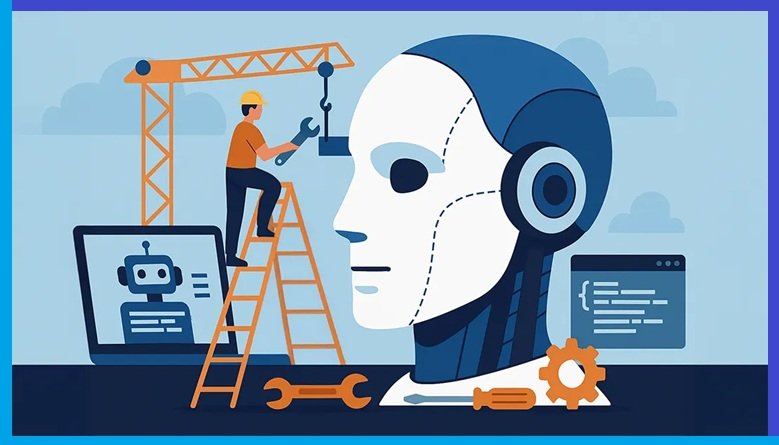
Artificial Intelligence is no longer only a tool; it is turning into a greater self-sustaining, capable, and choice-pushed. One of the most exciting concepts in AI research these days is agentic AI frameworks. These frameworks are designed to enable AI structures to act as unbiased sellers, making selections, studying from environments, and executing responsibilities with minimal human intervention. Understanding these frameworks is vital for AI developers, researchers, and lovers who are keen to explore the subsequent era of intelligent systems.
What Are Agentic AI Frameworks?
Definition of Agentic AI Frameworks
Agentic AI frameworks discuss with dependent models or systems that permit AI to operate as a self-sustaining agent. Unlike conventional AI, which relies on human instructions for each action, agentic frameworks empower AI to set desires, plan techniques, and execute obligations independently. These frameworks integrate device studying, reasoning, planning, and choice-making into a cohesive device.
Key Components of Agentic AI Frameworks
- Goal-Setting Module: Allows AI to define and prioritise goals.
- Perception Module: Collects records from the surroundings to inform choices.
- Decision-Making Engine: Determines the choicest action based on goals and perceptions.
- Learning System: Updates expertise and techniques based on consequences.
- Execution Layer: Performs moves within the actual or virtual surroundings.
By combining these components, agentic AI frameworks can perform in dynamic environments with minimum supervision.
Why Agentic AI Frameworks Are Important
Advantages of Autonomous AI Agents
- Efficiency: Reduces human intervention by allowing AI to take proactive movements.
- Scalability: Enables structures to address complex, huge-scale troubles.
- Adaptability: Learns from experience and adapts strategies routinely.
- Innovation: Supports discovery of new answers through self-sustaining exploration.
These advantages display why companies in generation, finance, healthcare, and robotics are increasingly making an investment in agentic AI frameworks.
How Agentic AI Frameworks Work
Step 1: Perceiving the Environment
The first step in agentic AI is amassing data from the environment. Sensors, APIs, or data streams feed statistics to the AI machine. For instance, a self-driving automobile uses cameras, LIDAR, and GPS information to perceive visitors and obstacles.
Step 2: Goal-Oriented Planning
Once facts are accumulated, the AI device determines what it wishes to attain. Goals can vary from completing a shipping challenge to optimising aid allocation. The making plans issue identifies a series of actions to reach the desired final results.
Step 3: Decision-Making and Learning
The AI evaluates possible movements, the usage of predictive models or reinforcement learning to gain knowledge of. As it executes responsibilities, it constantly updates its information, enhancing future decision-making. This gaining knowledge of loops is vital in agentic AI , allowing structures to emerge as smarter over the years.
Step 4: Execution of Tasks
Finally, the AI includes our responsibilities, primarily based on decisions. In robotics, this could contain moving gadgets; in software, it can contain optimising code or coping with financial portfolios. The agentic framework ensures the AI adapts if situations alternate throughout execution.
Applications of Agentic AI
1. Robotics and Autonomous Machines
Autonomous robots in manufacturing, agriculture, and logistics use agentic AI to navigate environments, plan movements, and respond to sudden events.
2. Digital Assistants and Virtual Agents
Virtual assistants equipped with agentic frameworks can control schedules, ship reminders, and even negotiate tasks with studying choices and learning from beyond interactions.
3. Finance and Trading Systems
Agentic AI frameworks permit trading structures to make autonomous investment choices, display market traits, and modify strategies in real-time.
4. Healthcare and Diagnostics
In healthcare, AI sellers can autonomously analyse patient information, advocate remedies, and monitor progress without constant human supervision.
5. Smart Cities and IoT
Agentic AI frameworks assist smart metropolis structures in manipulating traffic, electricity intake, and emergency response by performing as self-sustaining coordinators.
Challenges of Agentic AI
Technical Challenges
- Complexity: Integrating notion, selection-making, and execution is tough.
- Reliability: AI must avoid errors in high-stakes environments.
- Data Requirements: Autonomous systems require large volumes of brilliant records.
Ethical and Safety Concerns
- Autonomy Risks: AI choices without human oversight can cause accidental results.
- Accountability: Determining obligation for AI actions is legally complex.
- Bias: Learning from biased information can perpetuate unfair outcomes.
Addressing these demanding situations is vital to the secure adoption of agentic AI frameworks.
Future Trends in Agentic AI
- Hybrid Systems: Combining agentic AI with human oversight for balanced autonomy.
- Explainable AI: Developing structures that can explain their autonomous decisions.
- Cross-Domain Learning: AI sellers capable of shifting expertise across exceptional obligations.
- Collaboration: Multiple AI dealers operating together in coordinated frameworks.
The future of AI will closely depend on robust agentic AI frameworks for scalable and intelligent automation.
Conclusion
Agentic AI frameworks constitute an extensive evolution in artificial intelligence, shifting from reactive structures to self-sufficient, decision-making sellers. These frameworks are already transforming industries, including robotics, healthcare, finance, and smart towns. While demanding situations remain, the advantages of agentic AI —inclusive of performance, adaptability, and scalability—make them a vital focus for AI studies and improvement.
As AI systems strive to conform, knowledge and applying agentic AI frameworks will be crucial for corporations, developers, and researchers trying to harness the overall capacity of self-reliant intelligence.
FAQ
Q.1: What are agentic AI frameworks?
Ans: They are dependent fashions that enable AI structures to act as self-sustaining dealers, capable of perceiving environments, setting desires, making decisions, and executing obligations independently.
Q.2: How do agentic AI frameworks differ from conventional AI?
Ans: Unlike conventional AI, which calls for regular human input, agentic AI frameworks permit AI to function autonomously, learn from experience, and adapt techniques.
Q.3: Where are agentic AI frameworks used?
Ans: They are utilised in robotics, virtual assistants, healthcare, finance, smart towns, and IoT structures.
Q.4: What are the primary demanding situations of agentic AI frameworks?
Ans: Challenges include technical complexity, reliability, record-keeping needs, ethical worries, and accountability for self-reliant selections.
Q.5: Why are agentic AI frameworks critical for the destiny?
Ans: They permit scalable, adaptive, and intelligent self-sustaining structures that could cope with complicated real-world tasks with minimal human supervision.
Read More:-
